Skip to content
A community & visitor guide · in association with the Kotagiri Citizens' Group

Nature & wildlife

A sky island of the Western Ghats

Shola forests, rolling grasslands and rare endemic creatures found nowhere else on Earth — a field guide to the wild heart of the Nilgiris.

The shola–grassland mosaic

The defining landscape of the high Nilgiris is a mosaic found nowhere else on Earth: pockets of dense, stunted evergreen 'shola' forest tucked into the folds and valleys, stitched between sweeping native grasslands that roll across the exposed ridges. The two are not separate habitats but a single, ancient system, each shaped over millennia to fit precisely where it grows.

The grasslands are adapted to frost and fire, holding the open ridgelines where frost pockets and dry winds keep trees out, while the sholas survive in the sheltered hollows where moisture gathers and the cold cannot settle. This interlocking pattern, generally above about 1,800 m, gives the high country its distinctive look — the classic picture being the rolling expanse of the Wenlock Downs.

Beyond its beauty, the mosaic is a vital water tower. Its grasslands and forests act like a vast sponge, soaking up the monsoon and releasing it steadily through the dry months to feed the Bhavani and Moyar rivers and the plains far below. Damage the mosaic and you damage the water supply of millions.

Isolated high above the surrounding lowlands, the Nilgiris behave like an evolutionary 'sky island' — a cool, wet world cut off from other mountains, where species have evolved in isolation. The result is an extraordinary concentration of endemics: plants, birds, amphibians and insects that exist on these few hills and nowhere else.

Nature & wildlife

The Nilgiri Biosphere Reserve

In 1986 these hills became India's very first biosphere reserve, recognised under UNESCO's Man and the Biosphere programme and added to the World Network of Biosphere Reserves in 2000. Spanning roughly 5,520 km² across Tamil Nadu, Kerala and Karnataka, and ranging in elevation from around 80 m to 2,600 m, it remains one of the country's most important protected landscapes.

The reserve's biodiversity is staggering: more than 3,300 species of flowering plants, around 450 birds, over 100 mammals and some 315 butterflies. Within its bounds lie a cluster of celebrated protected areas — Mudumalai, Mukurthi, Bandipur, Nagarhole and Silent Valley — linked into one of the largest contiguous wildlife landscapes in southern India.

All of this sits within the Western Ghats, recognised as one of the world's eight 'hottest' biodiversity hotspots and inscribed as a UNESCO World Heritage Site in 2012. To stand on a Nilgiri ridge is to stand at the heart of a globally significant wilderness.

Flagship wildlife

Flagship wildlife

From the cliff-edge tahr to the gaur on the golf course, the mammals that define these hills.

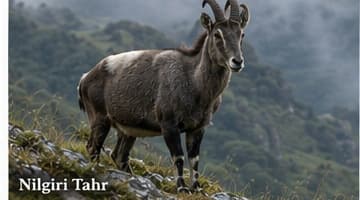
Nilgiri tahr
EndangeredEndemic

Nilgiri tahr

Nilgiritragus hylocrius

Tamil Nadu's state animal and the emblem of these hills — a stocky, sure-footed wild mountain goat found nowhere on Earth but the high Western Ghats. Mature males, called 'saddlebacks' for the pale patch across their backs, command the cliff-edge grasslands, yet barely 2,500–3,000 survive in the wild. Invasive wattle and eucalyptus plantations now choke the open grass it depends on, prompting Tamil Nadu to launch 'Project Nilgiri Tahr' in 2022.

Where: Best seen at Mukurthi National Park, about 28 km from Ooty; the largest single stronghold is Eravikulam in neighbouring Kerala.

Wild population estimate per Tamil Nadu Forest Department and IUCN; figures vary by survey.
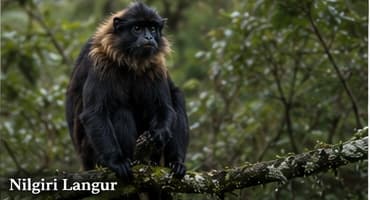
Nilgiri langur
VulnerableEndemic

Nilgiri langur

Semnopithecus johnii

A glossy jet-black leaf monkey crowned with a flowing golden-brown mane, endemic to the Western Ghats. It moves in troops through the canopy of the evergreen shola forests, feeding largely on leaves, and its booming dawn calls carry across the wooded valleys. Habitat loss and hunting have made it a Vulnerable species.

Where: Shola and evergreen forest pockets across the higher Nilgiris.

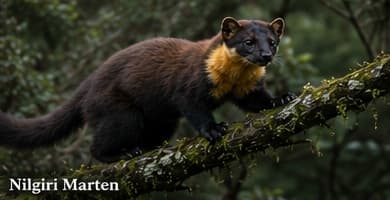
Nilgiri marten
VulnerableEndemic

Nilgiri marten

Martes gwatkinsii

The only marten in southern India and one of the most coveted sightings in the Western Ghats — a sleek, chestnut-brown animal with a vivid yellow-orange throat. Largely arboreal and rarely seen, it has earned the nickname 'phantom of the Western Ghats'. To glimpse one bounding through the canopy is the prize of any Nilgiri wildlife trip.

Where: Shola and tea-fringed forest across the hills; sightings are scarce and unpredictable.

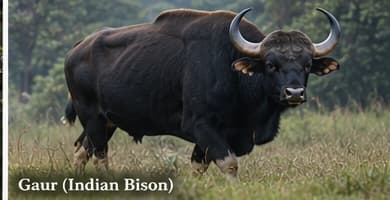
Gaur (Indian bison)
Vulnerable

Gaur (Indian bison)

Bos gaurus

The world's largest wild bovid, a muscular jet-black giant that is the Nilgiris' most reliable big-mammal encounter. Herds graze the outskirts of Ooty, Coonoor and Kotagiri, wandering golf courses and tea estates at dawn and dusk. Impressive but genuinely dangerous — keep a wide distance and never come between a gaur and its calf.

Where: Town fringes, tea estates and golf courses around all three hill stations — a near-certain sighting.

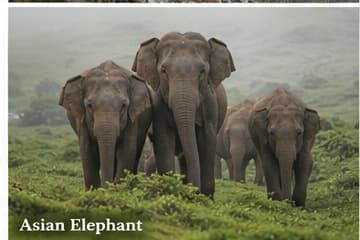
Asian elephant
Endangered

Asian elephant

Elephas maximus

The Nilgiri landscape — stretching from Mudumalai across Bandipur to Wayanad — holds India's single largest population of wild Asian elephants, roughly 6,000 animals. Herds move along ancient migratory routes between the hills and the plains with the seasons. The Sigur Plateau below Ooty is one of the most critical elephant corridors in the country.

Where: Mudumalai, the Sigur Plateau and the lower forests on the Nilgiri foothills.

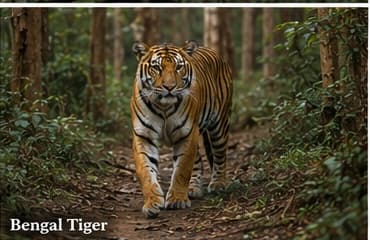
Bengal tiger
Endangered

Bengal tiger

Panthera tigris tigris

Mudumalai is a designated Tiger Reserve and part of one of the highest-density tiger landscapes anywhere in the world. Tigers move between Mudumalai, Bandipur, Nagarhole and Wayanad across an unbroken forest mosaic. Glimpses are rare and never guaranteed, but the deep forest below the hills is genuine tiger country.

Where: Mudumalai Tiger Reserve and the contiguous Nilgiri Biosphere forests.

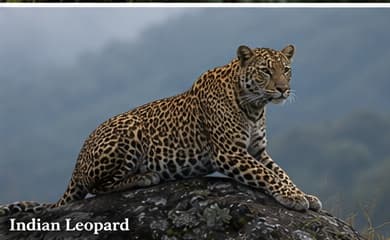
Indian leopard
Vulnerable

Indian leopard

Panthera pardus fusca

Adaptable and widespread, the leopard ranges from the lower forests right up into the higher hills and the wooded fringes of the towns. Largely nocturnal and secretive, it thrives even close to human settlement. Sightings are uncommon but possible almost anywhere in the Nilgiris.

Where: Throughout the hills, including higher elevations and the edges of towns.

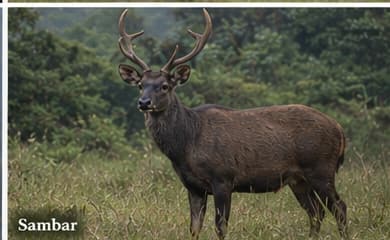
Sambar
Vulnerable

Sambar

Rusa unicolor

The largest deer of the region, a heavy, dark-coated browser that ranges from the lowland forests up into the high sholas. Its alarm call — a sharp, ringing bell — is often the first sign that a tiger or leopard is on the move. A frequent and rewarding sighting on the forest edges.

Where: Forests and shola edges from the foothills up to the high plateau.

Endemic birds checklist

Endemic birds checklist

An international birder's wishlist of Western Ghats and Nilgiri endemics, and where to find them.

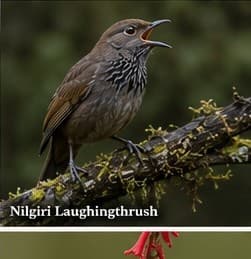
Nilgiri laughingthrush
EndangeredEndemic

Nilgiri laughingthrush

Montecincla cachinnans

A strict shola endemic, confined to the dense undergrowth of montane evergreen forest.

Sites:Longwood SholaDoddabettaCairn Hill

Its loud, cascading, laughter-like call gives the bird its name and often reveals it before it is seen.

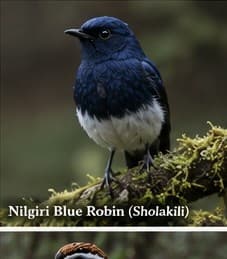
Nilgiri blue robin (Sholakili)
Near ThreatenedEndemic

Nilgiri blue robin (Sholakili)

Sholicola major

A secretive skulker of the dark shola understorey, more often heard than seen.

Sites:Longwood SholaAvalanche

Recently split from the 'white-bellied shortwing'; patience and a good local guide make all the difference.

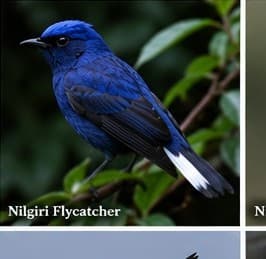
Nilgiri flycatcher
Least ConcernEndemic

Nilgiri flycatcher

Eumyias albicaudatus

A deep indigo-blue insectivore of shola edges, forest gardens and clearings.

Sites:Government Botanical GardensSim's ParkLongwood Shola
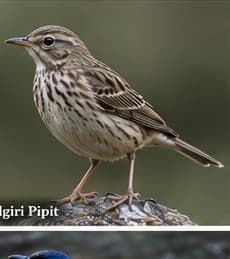
Nilgiri pipit
VulnerableEndemic

Nilgiri pipit

Anthus nilghiriensis

A grassland obligate, tied to the open high-altitude downs above the tree line.

Sites:Mukurthi National ParkAvalancheWenlock Downs
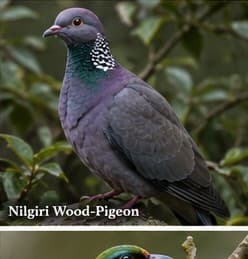
Nilgiri wood-pigeon
VulnerableEndemic

Nilgiri wood-pigeon

Columba elphinstonii

A large frugivorous canopy pigeon of the evergreen sholas, with a striking checkerboard nape.

Sites:AvalancheLongwood Shola
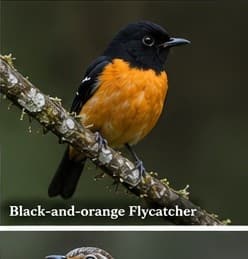
Black-and-orange flycatcher
Near ThreatenedEndemic

Black-and-orange flycatcher

Ficedula nigrorufa

Endemic to the high plateaus above 1,500 m, haunting the shola–grassland edge.

Sites:Longwood SholaAvalanche

Its vivid orange-and-black plumage makes it one of the most photogenic of the hill endemics.

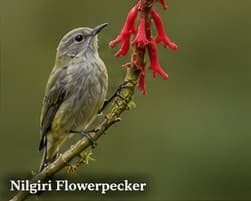
Nilgiri flowerpecker
Least ConcernEndemic

Nilgiri flowerpecker

Dicaeum concolor

A tiny nectar- and berry-feeder of hill forest, flowering trees and town gardens.

Sites:Government Botanical GardensSim's Park
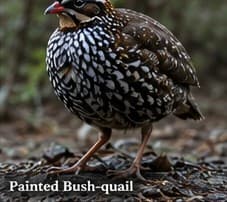
Painted bush-quail
Least Concern

Painted bush-quail

Perdicula erythrorhyncha

A red-billed hill quail that moves in coveys along grassland and scrub edges.

Sites:Mukurthi National ParkWenlock Downs
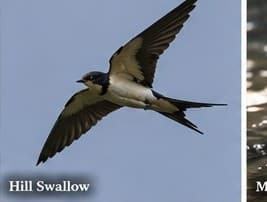
Hill swallow
Least Concern

Hill swallow

Hirundo domicola

A near-endemic swallow that wheels over the open downs, grasslands and town rooftops.

Sites:Wenlock DownsOoty
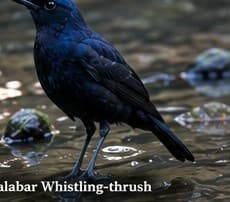
Malabar whistling-thrush
Least ConcernEndemic

Malabar whistling-thrush

Myophonus horsfieldii

A glossy blue-black thrush of fast shola streams, foraging on mossy boulders at the water's edge.

Sites:AvalancheCatherine Falls

Its rambling, human-like dawn song has earned it the nickname 'the whistling schoolboy'.

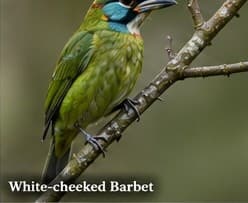
White-cheeked barbet
Least ConcernEndemic

White-cheeked barbet

Psilopogon viridis

An endemic green barbet of mid-elevation forest, fruiting trees and leafy gardens.

Sites:Sim's ParkLongwood Shola
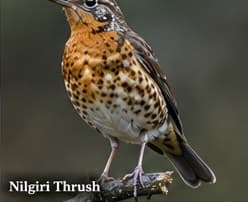
Nilgiri thrush
Least ConcernEndemic

Nilgiri thrush

Zoothera neilgherriensis

A localised montane thrush of the shady forest floor, foraging quietly in leaf litter.

Sites:Mukurthi National ParkLongwood Shola

Recently split from the scaly thrush complex; a tough but rewarding endemic to track down.

Where to watch

Where to watch

The best sites across the three towns, with permit needs and the seasons to aim for.

Kotagiri

Best time: Early morning

Longwood Shola

Permit required

The premier easy-access shola in the hills, holding 10 of the 16 Western Ghats endemic birds within a short walk. A forest guide is required (around ₹100 per person).

Ooty

Best time: October–March

Mukurthi National Park

Permit required

A high-altitude jewel and the single best site for Nilgiri tahr and the grassland birds. Entry is by advance Forest Department permit with a mandatory guide, and access is by guided trek only.

Ooty

Best time: October–June

Avalanche & Emerald

Permit required

A superb forest-and-lake birding belt of dense shola and trout streams, reliably productive for shola endemics and waterside species.

Ooty

Wenlock Downs

The classic rolling shola-grassland downs — the postcard image of the mosaic itself — and the place to look for grassland specialists. Gaur are frequent across the open grass.

Ooty

Best time: Early morning

Doddabetta

Shola patches cling to the slopes of the highest Nilgiri peak. Go early, before the viewpoint crowds arrive, to catch the forest birds in the quiet.

Ooty

Government Botanical Gardens

Surprisingly rich for endemics in a thoroughly strollable, well-kept setting — an easy introduction to the hill birds for first-time visitors.

Coonoor

Sim's Park

An easy, productive birding stroll through mature trees and lawns, dependable for the common hill species without any need for a trek.

Ooty

Best time: September–December

Mudumalai & the Sigur Plateau

Permit required

The lower big-mammal corridor below the hills — tiger, elephant, gaur and dhole all range here. Safaris run from Theppakadu within the tiger reserve.

What threatens the mosaic

What threatens the mosaic

  • Invasive wattle (Acacia mearnsii) and eucalyptus, planted commercially, now shade out and replace the native grasslands.
  • Lantana has spread aggressively through the lower forests, smothering the understorey.
  • Banana passionfruit creeper blankets and strangles the fragile shola edges.
  • The shola–grassland mosaic shrank by roughly 67% between 1973 and 2014.
  • Tea-estate monoculture and forest fires fragment habitat and break the corridors wildlife depends on.

Travelling responsibly

Travelling responsibly

  • Stay on the trails in sholas — the understorey is fragile and many endemics nest on the ground.
  • Respect tribal and community land, and always ask before photographing people.
  • Keep a wide distance from tahr and gaur; never use call playback to lure birds or bait wildlife.
  • Don't feed the monkeys, and drive slowly — elephants and gaur cross the roads without warning.
  • Submit your sightings to eBird and hire Forest-Department-recognised local guides.

Compiled from the Nilgiri Biosphere Reserve & Tamil Nadu Forest Department, IUCN Red List, eBird/BirdLife and Keystone Foundation sources. Endemic counts and IUCN statuses shift with taxonomy and reassessment; permit rules and fees change seasonally — verify with the Forest Department before travel.